 Quick Links
Many people are interested in the youthful results of dermal fillers but wish they could achieve longer-lasting results. For these patients, fat grafting, also known as autologous fat transfer, may be a great option. Dr. Andrés Sárraga offers personalized fat injection procedures in Aventura, FL.
WHAT IS AUTOLOGOUS FAT GRAFTING?
Fat grafting involves removing unwanted fat tissue from an area such as the abdomen, thighs, hips, or back and injecting the extracted fat into another area to create a youthful or more proportionate appearance. Fat grafting can restore volume to a sagging or deflated face, naturally filling the layer below the skin to improve a hollow area, scar, or post-liposuction dent or divot. Fat can be injected into the face, hands, and other parts of the body.
Harvested fat naturally contains adipose derived stem cells, which are studied for their potential role in tissue repair and regeneration. Fat grafting may improve skin quality, surface smoothness, and shape, although individual results vary. Results generally become apparent within three to four months after the procedure.
In plastic and reconstructive surgery, fat grafting can be used by itself or in combination with other procedures. Beyond facial rejuvenation, it may be used for breast augmentation or to refine contours during breast reconstruction, depending on the patient’s needs and surgical plan.
Facial implants, such as chin implants, can also help balance facial features and are frequently placed as part of a rhinoplasty. These implants are made of medical-grade silicone or Medpor. Incisions are usually made through the mouth or through small, concealable incisions under the chin or in other areas of the face.
HOW DOES THE FAT TRANSFER PROCEDURE WORK?
To complete a fat grafting procedure, excess fat is first removed from a donor site using liposuction before being prepared and injected into the treatment area. Fat grafting can help with facial deflation, scars, and post-liposuction deformities. When injected into the hands, it can restore volume and lessen the visibility of veins, tendons, and bones. It is also an excellent adjunct to other facial procedures, such as facelifts and eyelid or brow surgery.
The process of autologous fat transplantation uses living fat cells from your own body, carefully transferred to another area. With structural fat grafting, small amounts of fat are placed in layers to support natural-looking contours and help the transferred cells establish a blood supply.
This outpatient procedure is usually performed under sedation and requires small access incisions. Fat is harvested from the flanks, abdomen, and/or thighs and processed for injection. The amount of fat injected depends on the treatment area, available donor fat, and your aesthetic goals.
ANDRÉS SÁRRAGA MD FACS
DOUBLE BOARD-CERTIFIED PLASTIC SURGEON
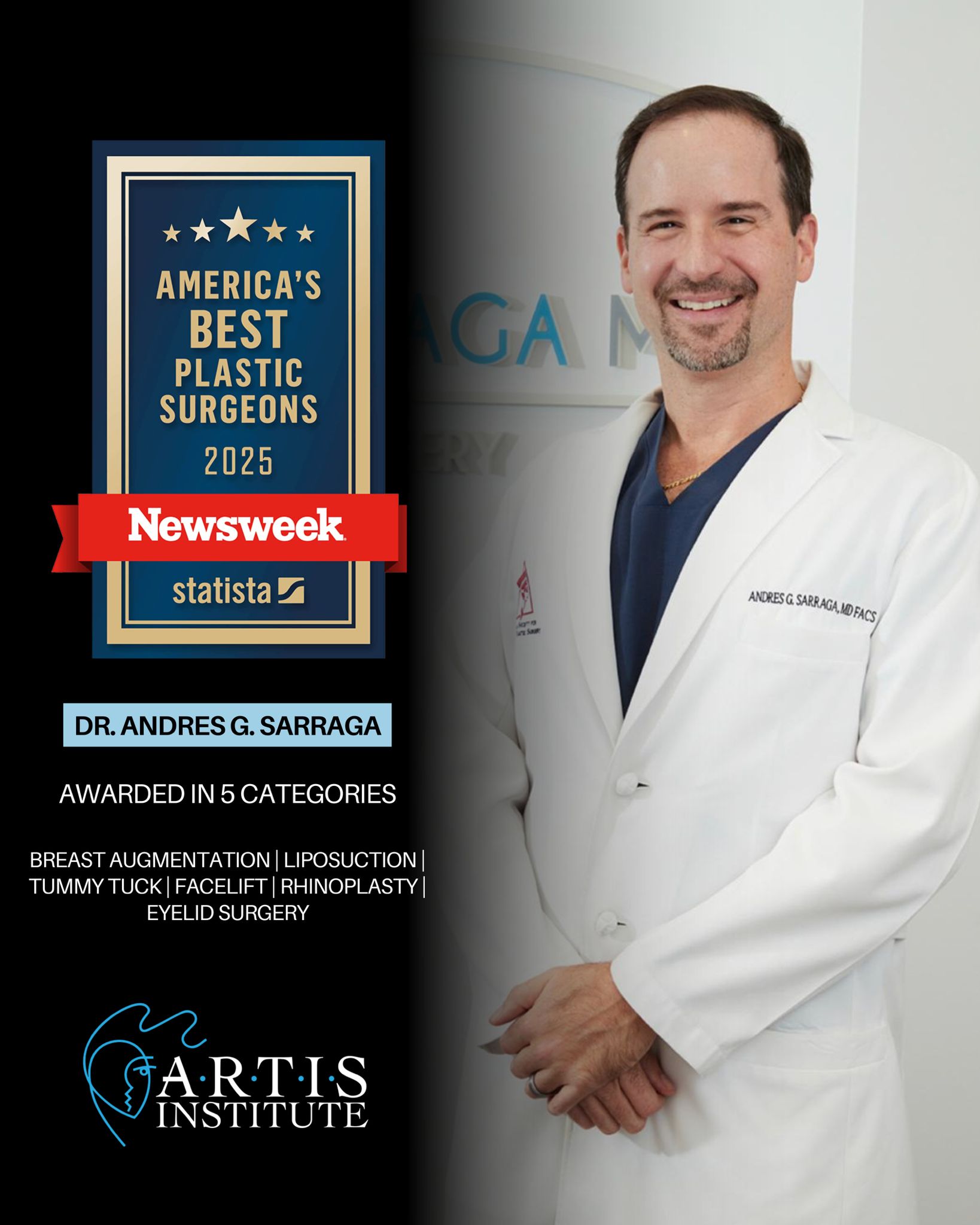
Dr. Sárraga was born and raised in Puerto Rico, where he spent most of his life. He decided at a very early age to follow in his grandfather’s footsteps and pursue a career in the art of medicine and surgery. Dr. Sárraga has been featured in several publications, including Aventura Magazine™ and Healthy Valley® Magazine, where he has discussed procedures, including Facial Rejuvenation and Breast Surgery. Dr. Sárraga has been awarded one of Castle Connolly’s top doctors in Miami for the last 5 years. He has also been featured with his friend and mentor, Dr. Storch. Since Dr. Storch’s retirement, Dr. Sárraga now runs ARTIS Institute Plastic Surgery, a multidisciplinary institute focused on rejuvenation, wellness, and regenerative medicine.
MEET DR. SÁRRAGA
FAT GRAFTING PROCEDURE RESULTS AND RECOVERY
Recovery time varies, but many patients feel comfortable returning to social activities in about three weeks. Depending on your healing progress and Dr. Sárraga’s instructions, you may also begin easing back into your regular exercise routine around this time. Swelling will continue to diminish as the transferred fat settles.
Common symptoms throughout the healing process include swelling, bruising, and sensitivity. A possible complication is fat necrosis, which occurs when some transferred fat cells do not survive and may lead to firm lumps or other changes in the treated area. Dr. Sárraga can explain potential risks and expectations for your procedure and recovery during a consultation.
Your body may retain approximately 50–70% of the transferred fat, although the amount varies by patient and treatment area. Results typically become more settled in about three to four months. Because the surviving cells are your own natural fat, they can respond to future weight changes.
FAT GRAFTING VS. DERMAL FILLERS
Fillers such as RESTYLANE, JUVEDERM, RHA, RADIESSE, and BELOTERO are ready-to-use injectables that help soften wrinkles and improve the appearance of nasolabial folds, marionette lines, cheeks, and other areas. They are often used in conjunction with wrinkle relaxers like Botox, Dysport, Daxxify, and Xeomin to enhance your overall result.
Several factors should be considered when choosing between fat grafting and dermal fillers. Generally speaking, fat grafting offers longer-lasting volume restoration than temporary dermal fillers and may also improve the quality of the overlying skin. However, some patients do not have adequate fat in donor areas to complete the procedure. In these cases, Dr. Sárraga may discuss other options, such as RENUVA, based on the treatment area and your goals.
Some downtime is necessary after fat grafting while the transferred fat integrates into the treated area and the liposuction area heals. Dermal fillers generally require little downtime, although temporary swelling and bruising may occur. Many patients can return to their usual routines shortly after treatment.
In many cases, dermal fillers have a lower initial cost than fat grafting. However, maintaining filler results requires repeat injections, which may represent a higher cost over time. The best way to choose between fat grafting and dermal fillers is to speak with a qualified and experienced professional, such as Dr. Sárraga, during a consultation.
SCHEDULE A CONSULTATION
If you believe you may benefit from fat grafting, Dr. Sárraga can evaluate your concerns, review your health history, and consider your aesthetic goals to recommend whether the procedure is right for you. Call (305) 932-3200 or contact our Aventura office online today to schedule your initial consultation and create a personalized treatment plan.
“You feel like you’re part of the family”
Dr. Sarraga and his staff are outstanding. Dr. Sarraga is extremely knowledgeable, professional and has a wonderful bedside manner, his office staff makes you feel comfortable during any type of procedure. The minute you step in the office you Yami makes you feel like you’re part of the family. After you have undergone surgery by the doctor Tami (best nurse) will take great care of you, even following up with you at home to make sure that you are feeling well
I highly recommend Dr. Sarraga and his office.
MORE REVIEWS
Dr. Andres Sarraga is a board-certified plastic surgeon with over 14 years of practice, renowned for his expertise in facial rejuvenation, eyelid surgery, rhinoplasty, and aesthetic breast procedures. Trained at the prestigious University of Massachusetts and mentored by leading experts in Boston and South Florida, Dr. Sarraga brings decades of advanced surgical training and artistic precision to every procedure. A published researcher and international presenter on fat grafting and reconstructive surgery, he combines innovation with compassion to deliver results that enhance both appearance and confidence. Recognized as a Castle Connolly “Top Doctor” for five consecutive years, Dr. Sarraga is widely respected for his meticulous technique, patient-centered care, and contributions to modern aesthetic surgery.







 Gallery
 Call
 Contact